XR Theater Project Budget and ROI Guide
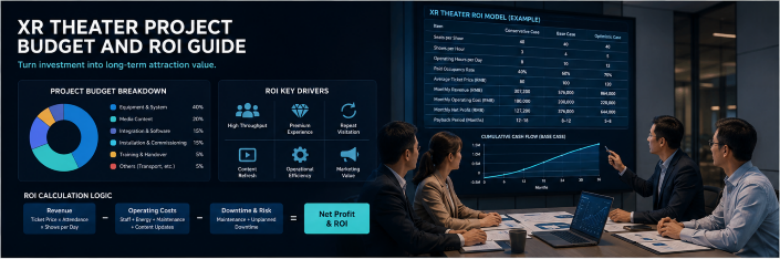
An XR Theater project budget only makes sense when it is tied to the operating model. If the venue team treats the theater as a one-time decoration, the ROI discussion becomes vague very quickly. If they treat it as a ticketed attraction with a known audience path, the numbers become more useful: capacity, ticket price, staffing, content refresh, downtime, and the marketing value of a strong indoor experience.
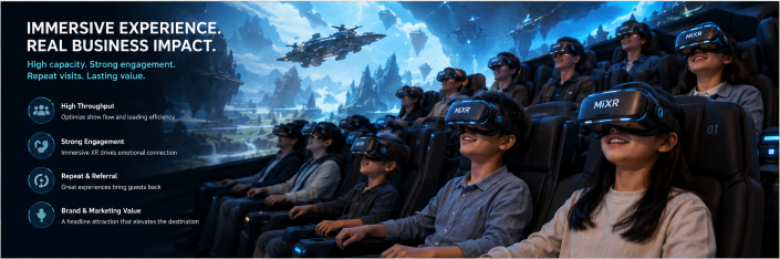
For MiXR XR Theater projects, buyers should expect a professional system, not a small gadget purchase. A commercial XR Theater or Hyper XR Theater can easily move into a RMB 1 million+ range when equipment, media, integration, installation, and commissioning are included. The question is not whether that figure sounds high. The question is whether the attraction can earn its place inside the site.
Separate the project budget from the operating model
A theater proposal may include hardware, media production, control software, seats or platforms, effects, installation, transport, and training. The buyer’s internal project plan may also include civil work, air conditioning, acoustic treatment, fire review, signage, queue barriers, ticketing connection, and local labor. These are not small afterthoughts. They decide whether the installation opens smoothly.
I prefer to split the planning into two columns. One column is the supplier scope. The other is the owner’s site scope. Many disputes happen because nobody drew that line early enough. A supplier can be responsible for the XR attraction system, while the owner still has to prepare power, room structure, safe circulation, and local approvals.
A practical budget meeting should include the operations manager, not only the purchasing team. The person who will run the theater every day will notice details that a buyer may miss: where headsets or accessories are stored, how guests are admitted, how many staff are needed during peak hours, and how the show is stopped if a visitor needs help. These details change the real financial picture.
I also like to see a simple monthly operating sheet before the contract is signed. It should show expected sessions, average occupancy, staff hours, energy use, cleaning supplies, maintenance reserve, and content update allowance. The sheet does not need to be perfect. It only needs to stop the team from treating opening-day excitement as a business plan.
ROI starts with real throughput
A theater that seats 40 people is not automatically a 40-person revenue event every five minutes. Loading time matters. So does the way families move through the door, where bags are placed, how staff give instructions, and whether the exit path crosses the next waiting group. The more physical the show, the more these small details matter.
- Estimate practical shows per hour, not theoretical show length.
- Use normal weekday traffic as the base case, then model weekends separately.
- Set a conservative paid conversion rate for the first six months.
- Include staffing, cleaning, consumables, electricity, content updates, and maintenance.
- Add a downtime allowance instead of assuming perfect operation.
- Test whether the payback still works when attendance is 20 percent lower than expected.
Ticket strategy matters more than many buyers think
Some operators bundle the XR Theater into a main ticket. Others sell it as an add-on. A bundled model can raise the perceived value of the whole destination, but it makes direct payback harder to measure. An add-on ticket gives cleaner revenue data, yet it needs strong signage and a clear reason for visitors to pay again.
For theme parks and cultural tourism sites, the strongest model is often mixed. Use the theater as a headline attraction in marketing, then create a paid priority session, group package, evening product, or school-tour module. That gives the venue more than one way to recover investment.
Do not forget content life
A theater can operate for years, but the content may need seasonal refresh or partial localization sooner. If the show is tied to a local festival, a city story, or a branded campaign, the buyer should agree on update rights and future production workflow before launch. Otherwise the first show becomes a locked asset that slowly loses its pull.
A practical buying rule
The better ROI guide is not a spreadsheet with perfect assumptions. It is a procurement conversation that forces clear answers. What is the theater’s role? Who is the visitor? How many people can it handle during normal hours? What happens when a sensor, projector, media server, or seat effect needs service? Which part of the experience can be refreshed without rebuilding the room?
MiXR’s value is strongest when these questions are discussed before the contract, because the company works across attraction planning, equipment integration, content support, and installation. That is the level of coordination an XR Theater usually needs. A buyer who only asks for the lowest line item may save money on paper and then pay for the missing planning inside the operation.