XR Theater Cost Guide
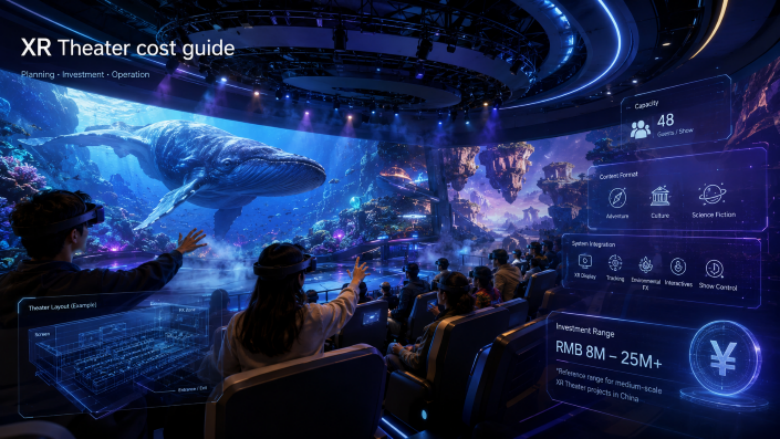
XR Theater cost depends less on the word “theater” and more on what the audience is expected to do. A passive projection room, a headset-based XR show, and an interactive Hyper XR Theater may all be called theater projects, but they are not the same type of investment.
For buyers in theme parks, cultural tourism sites, museums, and commercial entertainment venues, the cost discussion should begin with scope. How many visitors per session? How interactive is the show? Is the content original or adapted? Does the project need XR devices, seating, effects, gesture control, synchronized show control, or custom room design?
For a product such as MiXR’s Hyper XR Theater, buyers should usually think in terms of a RMB 1 million+ project. It is not a small projection-room upgrade. It is an integrated XR attraction system.
Main Cost Drivers
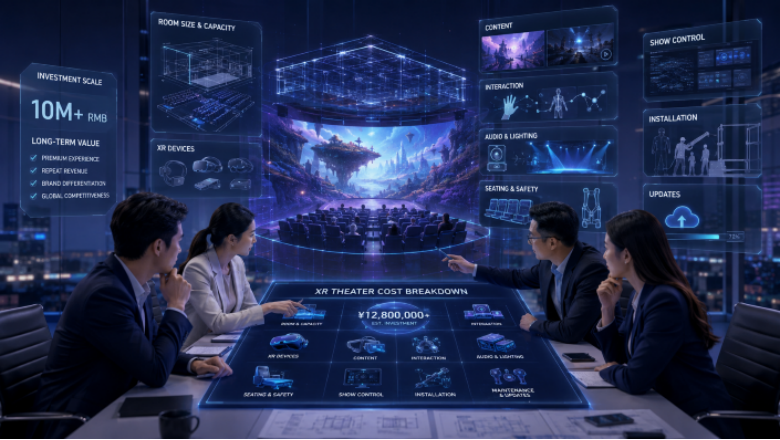
The main cost drivers usually include:
- Room size and visitor capacity.
- XR viewing devices or mixed display system.
- Content production or content license.
- Interaction system, such as gesture control.
- Audio, lighting, and environmental effects.
- Seating, layout, and safety design.
- Show control and synchronization.
- Installation, calibration, and training.
- Maintenance, spare parts, and content updates.
If a supplier quotes only equipment, the buyer still does not know the full project cost. For XR Theater, the real budget sits in the combination of equipment, content, integration, installation, and operation support.
Content Can Be a Major Cost
Content is often underestimated. A short show may still require script planning, 3D scenes, animation, sound design, interaction logic, testing, and localization. If the theater is built around a local story, museum theme, or park IP, content work can become a major part of the budget.
Generic content is cheaper, but it may not give the venue a strong reason to sell the attraction. Custom content costs more, but it can make the show belong to the site.
The buyer is not only purchasing devices. They are purchasing a repeatable visitor experience that should support ticketing, group activity, themed-area value, or cultural storytelling.
Equipment and Installation
An XR Theater may include headsets, media servers, operator consoles, tracking or gesture systems, audio, lighting, seating, effects, networking, and safety equipment. Installation is not just placing devices in a room. The system must be calibrated, tested, synchronized, and handed over to staff.
For a Hyper XR Theater, buyers should pay attention to the interaction layer. If the show depends on gesture control or group participation, the system has to be stable and easy to explain.
MiXR’s Hyper XR Theater is relevant when buyers want an integrated package covering equipment, content, interaction, installation, and operation guidance. That package can reduce coordination work, especially for buyers without an internal technical team.
Typical Planning Range
Exact pricing varies by configuration, content depth, room design, seat count, interaction level, installation conditions, and service scope. A smaller, passive immersive theater may cost less if it only uses projection, audio, and fixed media content. A true XR Theater with interaction, XR viewing, synchronized effects, and custom show control sits in a different category.
These figures should be treated as planning references, not final quotations. Local construction, decoration, freight, taxes, and site conditions can still change the final number.
Hidden Costs
Buyers should also plan for:
- Room preparation and decoration.
- Power, network, ventilation, and air conditioning.
- Staff training and operating documents.
- Cleaning supplies and hygiene accessories.
- Spare headsets, straps, batteries, or sensors.
- Launch marketing materials.
- Future content refresh.
These items may not be the most exciting part of the budget, but they affect daily operation. A serious XR Theater project should not be planned only around hardware. The operating details decide whether the attraction feels professional after opening.
How to Compare Quotes
When comparing suppliers, ask each one to separate:
- Equipment.
- Content.
- Software.
- Installation.
- Training.
- Support.
- Optional updates.
- Local responsibilities.
Then ask for real operating capacity. A lower-cost theater that handles fewer paid visitors per hour may not be cheaper in business terms.
For XR Theater, the buyer should also ask what kind of visitor experience the price supports. Is it mostly passive viewing? Is there gesture interaction? Are visitors participating as a group? Can the content be updated later? Is staff training included? These questions matter more than room size alone.
A Better Cost Rule
Do not choose XR Theater cost by room size alone. Choose it by experience depth, capacity, content value, and operating difficulty.
If the venue only needs a visual show, a simpler immersive theater may be enough. If the venue needs participation, digital characters, gesture interaction, and a more active audience role, a Hyper XR Theater may justify the higher investment.
The right budget is the one that lets the theater work after opening day, when staff are running real sessions and visitors are deciding whether the ticket was worth it.
When a Higher Cost Is Justified
A higher XR Theater cost can be justified when the theater has a clear role in the venue’s revenue plan. If the attraction supports a branded story, premium ticket, group booking, themed-area upgrade, or seasonal refresh, better content and stronger integration may pay back over time.
It is harder to justify a high budget when the theater is hidden, the story is generic, or the operator has no plan for repeat demand. In that case, the buyer should simplify the scope before increasing the equipment list.
The cost decision should feel connected to the visitor promise. If guests are paying for participation, the interaction must work. If they are paying for spectacle, the visual and audio system must deliver. Spending should follow the value visitors can actually feel.
One practical way to control cost is to separate what must be ready for opening from what can be added later. Core show equipment, safety, content, interaction, installation, and training cannot be delayed. Extra decorative elements, additional effects, or second-phase content may be scheduled after the first operating data is available.
For buyers considering MiXR’s Hyper XR Theater, the key point is simple: this is a million-RMB-plus attraction investment, not a low-cost media room. The project should be planned around visitor value, operational capacity, and long-term use, not just the lowest possible equipment quote.